An applicant tracking system, or ATS, is the software a company uses to collect and sort applications. When you apply on a careers page, your resume goes there first. A recruiter then reads it inside the system, searches it and filters it.
An ATS resume is simply a resume that this software can read correctly and that a recruiter can find with a search.
We looked at all 43,514 open US tech and digital jobs on Sudo Get Job on November 10, 2026, to see which systems they use and what they ask for.
Which ATS tech companies use
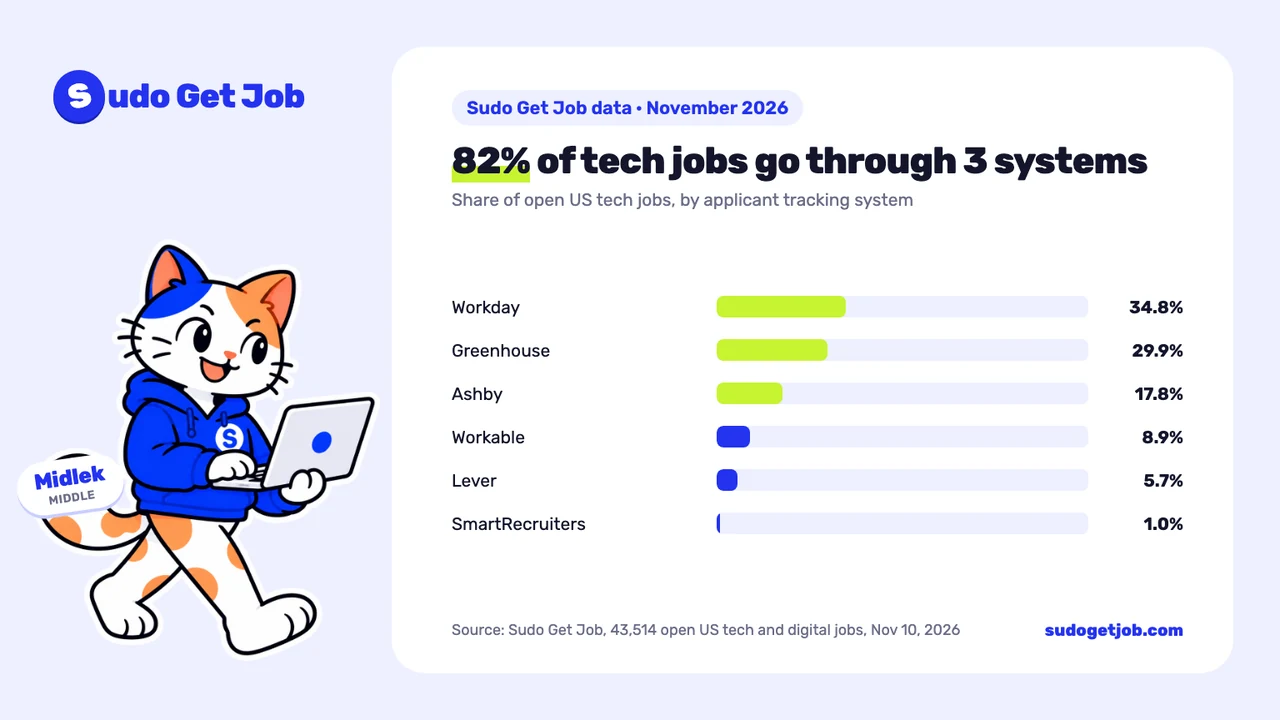
| System | Open US tech jobs | Share of jobs | Companies |
|---|---|---|---|
| Workday | 15,126 | 35% | 265 |
| Greenhouse | 12,993 | 30% | 758 |
| Ashby | 7,742 | 18% | 795 |
| Workable | 3,878 | 9% | 1,146 |
| Lever | 2,476 | 6% | 245 |
| SmartRecruiters | 436 | 1% | 23 |
Workday is used mostly by large employers, so it has the most jobs with the fewest companies. Workable is the opposite: many small companies. The full breakdown is in Which applicant tracking systems tech companies use.
You do not need a different resume for each system. One clean resume works for all of them.
Format: what makes a resume easy to read
- 1
One column
Tables, side columns and text boxes can be read in the wrong order.
- 2
Standard headings
"Experience", "Education", "Skills". A recruiter searching the system expects them.
- 3
Real text
No skills shown as icons, bars or pictures. Text inside images cannot be searched.
- 4
Your contact details in the body
Not only in the page header or footer.
- 5
Clear job entries
Title, company, dates, then what you did.
- 6
The file type the form asks for
If it does not say, PDF or DOCX are the usual choices.
Keywords: use the words from the post
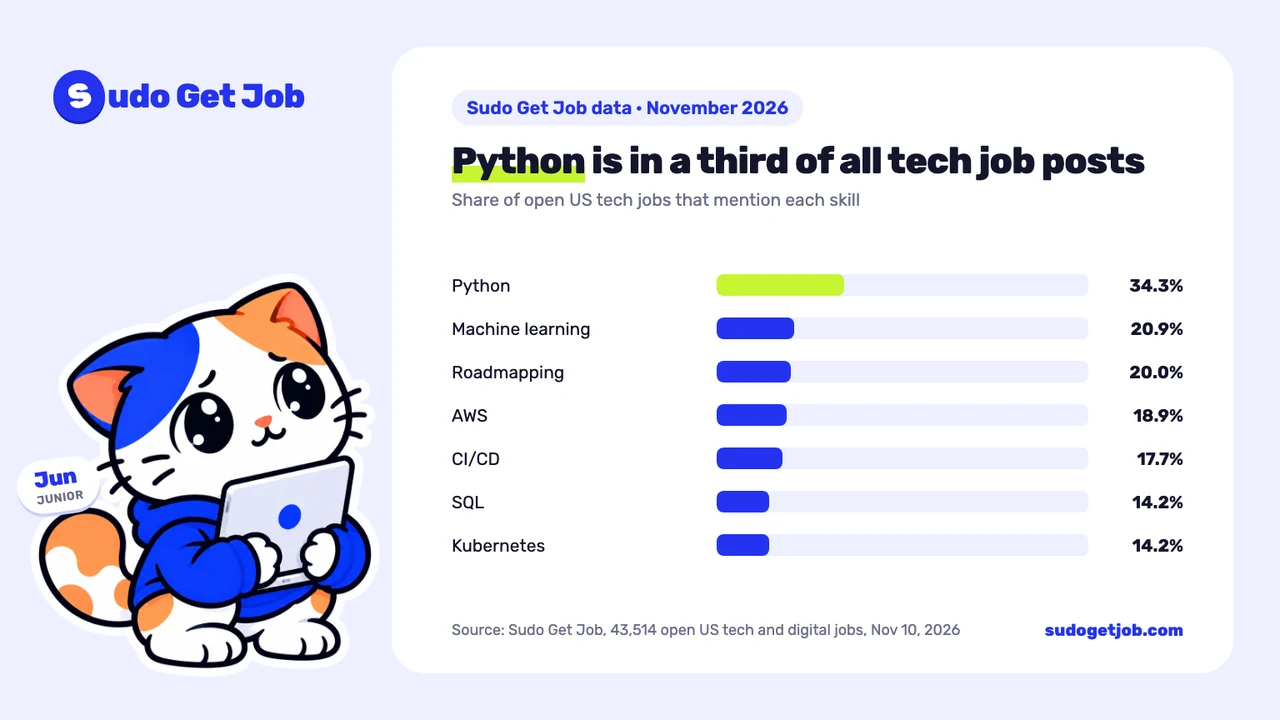
Recruiters search the system by skills and tools. If the post says "Kubernetes" and your resume only says "container orchestration", a search may miss you.
These are the skills that appear most often in open US tech job posts on our board:
| Skill | Share of open jobs |
|---|---|
| Python | 34% |
| Machine learning | 21% |
| Roadmapping | 20% |
| AWS | 19% |
| CI/CD | 18% |
| SQL | 14% |
| Kubernetes | 14% |
| LLMs | 13% |
| AI agents | 13% |
| Linux | 12% |
A typical post names 6 of the skills we track. Put the ones you really have in your skills section and in the job entries where you used them. More data: Most in-demand tech skills.
What job posts actually check
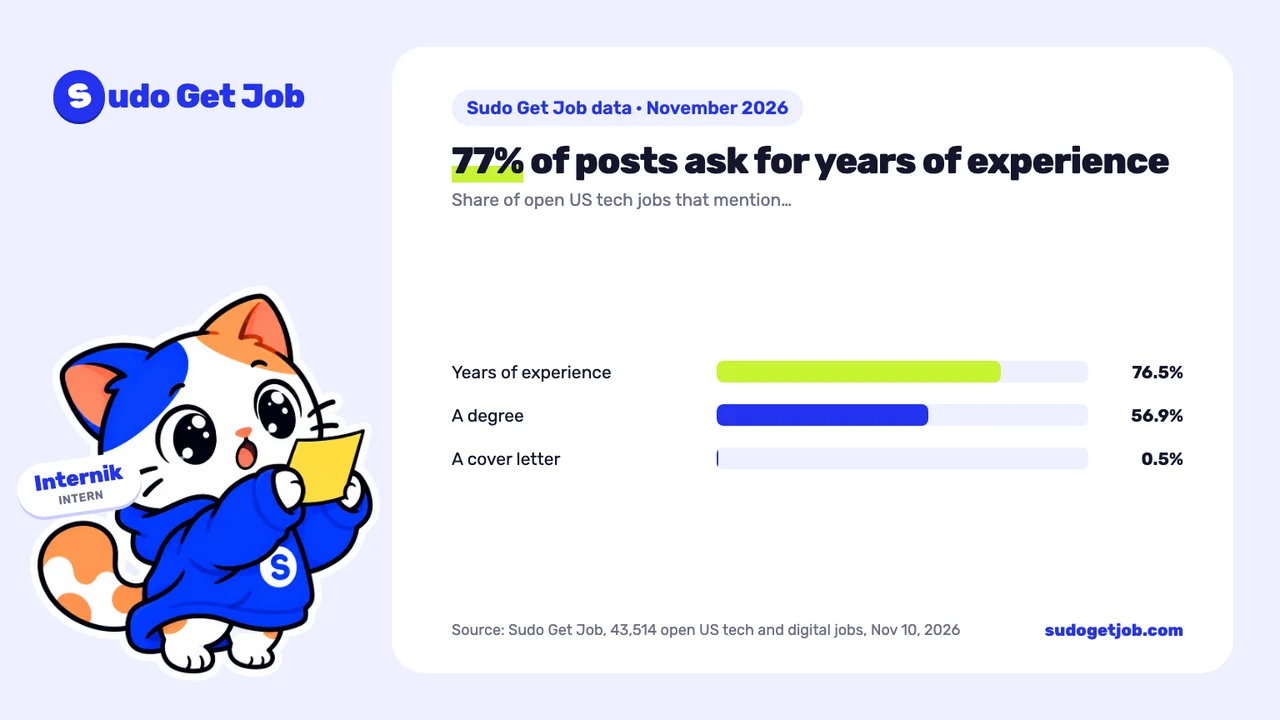
Most posts ask for things a recruiter can filter on quickly:
So make these easy to find. Put the dates on every job. Put your degree, or "equivalent experience" if the post allows it, in its own section. A cover letter rarely matters in tech: almost no posts mention one.
A quick check before you apply
- The layout is one column, with no tables or text boxes.
- Headings are "Experience", "Education", "Skills".
- Every skill from the post that you really have is written the same way.
- Dates are on every job.
- Contact details are in the body of the page.
- The file opens and the text can be selected and copied.
The last check is the simplest test: if you can copy the text out of your file, software can read it too.
Method
Our data: open US tech and digital jobs on Sudo Get Job, taken from employers' careers pages and checked every hour, counted on November 10, 2026. The system is the one the job is posted through. Skills are matched in the job description against our list of skills. Shares for years of experience, degree and cover letter count posts whose description mentions them.